Keeping Warm Safely: What Homeowners Should Check Before Using a Modern Fire Pit
Why a quick safety review matters
A modern fire pit can turn a patio into a gathering spot long after the sun goes down. The warmth, the glow, the sound of wood or gas, it all makes the outdoors feel like an extra room. But before you light that first fire of the season, a few minutes spent checking key details can prevent trouble. Heat, fuel, and weather all play a part, and overlooking them can turn a relaxing evening into an emergency. This article walks through the main points every homeowner should check, so you can enjoy the fire with real peace of mind.
Check the location and clearances
Where you place the fire pit matters as much as the pit itself. A common mistake is setting it too close to the house, a deck railing, or low-hanging tree branches. Even modern fire pits designed with better heat shielding still need space. As a general rule, keep the unit at least ten feet from any structure, and at least three feet from furniture, plants, or anything flammable. The ground beneath should be level, non-combustible, and stable. Stone, brick, or concrete pavers work well; dry grass or wooden decks need extra caution and often a protective mat or pad underneath.
Also think about overhead clearance. A covered patio or pergola looks inviting, but if the ceiling is low or made of wood, the heat can damage it over time. Some fire pits are rated for use under certain types of overhead structures, but many are not. When in doubt, keep the fire pit in an open area where the heat can rise freely.
Check the burner system and fuel type
The kind of fuel your fire pit uses shapes what you need to inspect. For a gas-powered model, the burner system is the heart of the unit. Look at the burner ports, they should be free of debris, spider webs, or dirt. Even a small blockage can cause uneven flames or, worse, a buildup of gas that ignites unpredictably. Check the connection from the gas line to the burner for any signs of wear or looseness. If you smell gas at any point when the system is off, turn off the supply immediately if it is safe to do so, open the area, and call a qualified technician. Never try to fix a gas leak yourself.
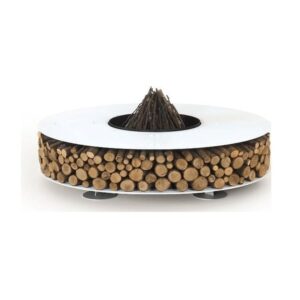
For wood-burning pits, the concern is different. The fire bowl should be deep enough to contain logs and ash, and the grate should allow air to flow underneath. Wet or treated wood can pop and throw sparks, so use only seasoned, dry firewood. Never burn trash, cardboard, or construction scraps; the chemicals can produce harmful fumes and damage the bowl.
Check the fire glass and fill material
Many modern fire pits use fire glass, lava rock, or ceramic stones as a decorative fill. These materials serve a real purpose: they help distribute heat and protect the burner. But they need to be the right type. Regular river rocks or glass from a craft store can trap heat and crack or explode. Always use material rated for fire pits. Check the fill depth against the manufacturer’s recommendation. Too much can smother the burner; too little leaves the burner exposed and the flame uneven. Over time, the fill can get dirty or sooty, which reduces its reflectiveness and heat output. A gentle rinse and dry restores it, but only when the unit is completely cool.
Check the protective cover and weather resistance
Outdoor fire pits face rain, snow, sun, and wind. Weather resistance varies by build, but even the best models benefit from a good protective cover. A cover keeps water out of the burner system, prevents rust on steel parts, and stops leaves and dirt from collecting in the fire bowl. Before you use the pit, take the cover off and check inside. Moisture can hide in the burner area, and if you light a gas pit with water in the lines, the flame can sputter or the ignition may fail. For wood pits, a wet interior can cause the first fire to smoke more than usual. Let everything dry completely before lighting.
Wind is another factor. A sudden gust can blow a flame sideways or carry embers into dry grass. Many fire pits have a screen or a wind guard. If yours does not, think about where you set up. A spot that is sheltered by a fence or hedge on one side can reduce wind exposure. On very gusty days, it is better to skip the fire altogether.
For those looking to add a modern fire pit to their outdoor space, PowerFurniture USA offers a range of models that combine clean design with practical safety features. Their selection includes both gas and wood-burning options, so you can find a unit that fits your patio and your comfort level.
Check the heat output and the space around it
Heat output is measured in BTUs for gas pits and roughly by size for wood pits. A unit with high heat output warms a large area quickly, but it also demands more clearance. If your patio is small, a very powerful fire pit can make the space uncomfortably hot and increase the risk of nearby items catching fire. Think about how you plan to use it. For a cozy chat with two or three people, a smaller burner works fine. For a bigger group, you may want more heat, but then you need to give it room. Always check the manufacturer’s recommended clearance for the specific model you own.
Also consider the surface under and around the fire pit. Outdoor rugs, plastic furniture, and cushions can all melt or burn if placed too close. A good rule is to keep anything that could catch fire at least three feet away. That includes bags, coats, and children’s toys. Make it a habit before you light up: scan the circle around the pit and move anything that looks iffy.
Check the ignition and controls
Gas fire pits often come with a push-button or electronic ignition. Test it before the season starts. If the spark is weak or the flame does not catch, the problem may be a dead battery, a dirty electrode, or air in the gas line. Most of these are simple fixes: replace the battery, clean the electrode with a soft brush, or let the gas run for a few seconds before trying again. But if the ignition does not work reliably, do not force it. A lighter or match used carefully can work as a backup, but only if you follow the manufacturer’s instructions. Never leave the gas on without a flame for more than a few seconds.
The control knob or valve should turn smoothly and shut off completely. A sticky or loose knob can be a sign of wear or debris. If the valve does not close fully, the gas can keep flowing even when you think it is off. That is a serious safety issue. Have a qualified technician inspect and repair any gas control problem.
Check for stability and tipping risk
A fire pit that wobbles or sits unevenly is a hazard. Before each use, give the unit a gentle push from different sides. It should not rock or shift. If it does, check the legs or base for damage, and make sure the ground is level. For portable models, children and pets can accidentally bump into them. Consider a heavier unit or one with a wider base if you have a busy yard. Some modern fire pits come with a locking mechanism for the lid or a built-in anchor point. Use those features if you have them.
For those who want to browse fire pits that combine style with sturdy construction, PowerFurniture USA has a curated collection built for real outdoor use. Their models are designed with the homeowner in mind, offering both aesthetic appeal and the practical details that make daily use safer.
Final checks before lighting
Once you have gone through the points above, run through a quick mental checklist: Is the pit at least ten feet from the house and three feet from anything flammable? Is the burner clear and the gas connection tight? Is the fill material correct and at the right depth? Is the cover off and everything dry? Are the controls working smoothly? Is the unit stable on level ground? If the answer to all of these is yes, you are ready to light the fire. Keep a fire extinguisher or a bucket of sand nearby, and never leave the fire unattended. With a little care, a modern fire pit can provide years of warmth and enjoyment.